Category: Blog

Your blog category

  • What is IPO? Types of IPOs and How It Works for Your Business?

    What is IPO? Types of IPOs and How It Works for Your Business?

    As an entrepreneur, you’re always looking for ways to take your business to the next level. But what if the next big step involves tapping into a much larger pool of capital to fund your growth? That’s where an IPO (Initial Public Offering), comes in. It’s a term that many entrepreneurs and investors have heard of, but few fully understand. In this blog, we will understand what is IPO, types of IPOs, and most importantly, how it works for your business. By the end of this blog, you’ll have a clear understanding of how an IPO can potentially help your business expand and how you can prepare for it. Let’s dive in!

    What is an IPO? Types of IPO and How it Works?

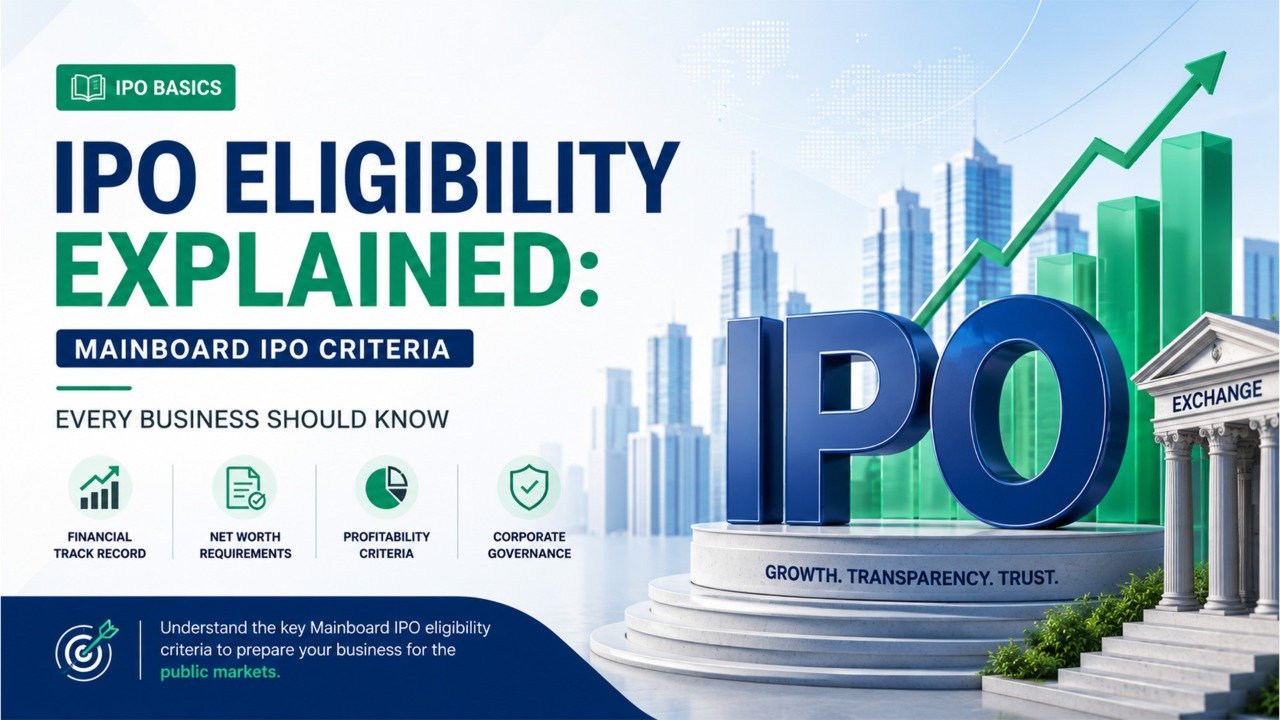
    An Initial Public Offering (IPO) is when a private limited company registered with the ROC in India offers its shares to the public for the first time. In simple terms, consider it as a business opening its doors to the public, allowing people to buy ownership of the company through shares. In this transaction, the business gets the funds it needs to expand, and the buyers (investors) get a stake in the company, hoping it will perform well and make a profit.

    The company that conducts the IPO becomes listed on a stock exchange, such as the National Stock Exchange (NSE) or Bombay Stock Exchange (BSE) in India. Once listed, the company’s stock can be bought and sold freely by the public, giving it liquidity and visibility in the market.

    Book Building IPO Vs Fixed Price IPO: Understanding Different Types of IPOs

    Understanding the types of IPOs can help investors make informed choices when a company goes public. The two main types are:

    Fixed Price IPO

    In a Fixed Price IPO, the company and its underwriters predetermine a specific price at which the shares will be offered to the public. Investors know this price in advance and can decide to buy shares based on this fixed rate. The success of a Fixed-price IPO is measured by analyzing the demand for shares at the set price.

    Example: If a company sets the IPO price at ₹100 per share, investors know exactly how much they’re paying per share.

    Book Building IPO

    In a Book Building IPO, the share price is set within a price range rather than a fixed amount. Investors place bids within this range, specifying the number of shares they’re willing to buy and the price they’re ready to pay. Based on the demand and bids received, the final price is set, commonly referred to as the “cut-off” price. This type of IPO is more flexible and allows the company to gauge investor demand.

    Example: If the price range is set between ₹90 and ₹120, investors may bid at different points within this range, and the final price depends on demand.

    How Does it Work for Your Business?

    Let’s walk through the entire IPO process, step-by-step, with a simple example. Consider a hypothetical company, ABC Solutions, a startup in the tech industry that needs capital to expand. The founders decide to take the IPO route to raise funds.

    Step 1: Appoint a Merchant Banker (IPO Lead Manager)

    The first step for ABC Solutions is to hire an expert Merchant Banker with a proven track record (such as Gretex Corporate Services Limited) to manage the IPO. The Merchant Banker’s role is to guide the company through the IPO process, including assisting in determining the share price, and the amount to be raised, and handling all legal requirements. 

    Step 2: Regulatory Approvals and Documentation

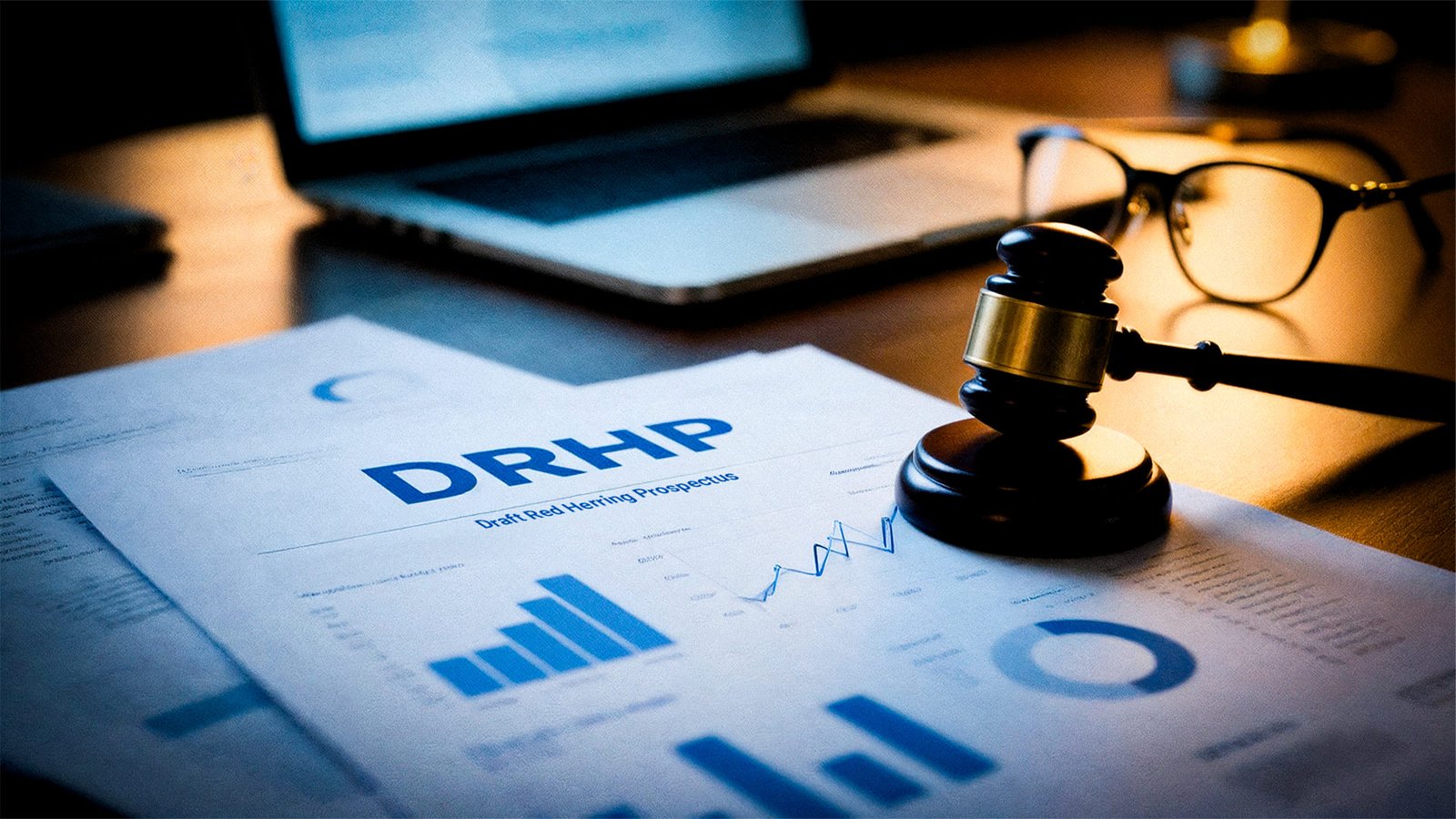
    Next, the Merchant Banker helps prepare documents for regulatory approval. In India, companies must file a Draft Red Herring Prospectus (DRHP) with the Securities and Exchange Board of India (SEBI). This document provides details about the company’s financials, the IPO structure, and how the raised funds will be used. SEBI reviews these documents to protect investor interests and ensure transparency.

    Step 3: Setting the Price Range or Fixed Price

    Once the approval is in place, ABC Solutions and its Merchant Banker will decide on the IPO pricing model. Suppose they choose a book-building approach with a price range of ₹100-120 per share. Potential investors can then place bids within this range.

    Step 4: Marketing the IPO

    Promoting the IPO is a crucial step. Roadshows, media coverage, and advertisements help build interest among institutional investors and the general public. This marketing phase is essential to create a buzz and attract potential investors.

    Step 5: Subscribing to the IPO

    Now, investors can apply for shares by submitting bids during the subscription period. Institutional investors, retail investors, and qualified institutional buyers (QIBs) participate in this stage. If the demand for shares is high, the IPO may become oversubscribed, which means more bids are received than the number of available shares.

    Step 6: Share Allotment

    After the subscription period closes, the final price is set (if it’s a book-built IPO). The allotment process begins, where shares are distributed to successful applicants. Investors may receive fewer shares than they applied for if the IPO is oversubscribed.

    Step 7: Listing on the Stock Exchange

    Once shares are allotted, ABC Solutions is officially listed on the stock exchange, such as the NSE or BSE. The shares begin trading, and the public can buy or sell them on the open market. The listing day often sees fluctuations in the stock price as market demand and sentiment take over.

    Is an IPO Right for Your Business?

    In essence, an IPO is the bridge connecting private business aspirations with public investment opportunities, a tool that has powered many successful companies’ growth. By going public, a company opens itself to a broader investor base and gathers funds to fuel its expansion. While large corporations dominate IPO news, there is an increasing trend for small and medium-sized enterprises (SMEs) to explore IPOs, due to their innovative financial platforms and supportive policies. 

  • Union Budget 2025: A Blueprint for Viksit Bharat

    The Union Budget 2025-26, presented by Finance Minister Nirmala Sitharaman, lays out the government’s vision for India’s economic future. The Budget 2025 focuses on accelerating growth, inclusive development, boosting private investment, and empowering the middle class section. Let’s understand the key highlights in a simple question-and-answer format, designed to help you effortlessly get the essence of this crucial economic document. Let’s dive into the details of the Blueprint for Viksit Bharat: 

    What is the core theme of Union Budget 2025-26?

    This budget’s core theme is “Sabka Vikas,” meaning development for all. It envisions a “Viksit Bharat” (Developed India) characterized by zero poverty, 100% quality education, accessible healthcare, widespread skilled employment, greater participation of women in the workforce, and a thriving agricultural sector that positions India as a global food basket.  

    What are the six key domains targeted for transformative reforms?

    The budget aims to initiate major reforms in:

    • Taxation
    • Power Sector  
    • Urban Development
    • Mining  
    • Financial Sector  
    • Regulatory Reforms  

    Budget 2025 for Agriculture: How will Farmers Benefit?

    Agriculture, the backbone of the Indian economy, receives significant attention. The Prime Minister Dhan-Dhaanya Krishi Yojana aims to revitalize 100 underperforming agricultural districts. This will involve improving irrigation, introducing modern farming techniques, and providing better access to credit, benefiting approximately 1.7 crore farmers. The government is also pushing for self-sufficiency in pulses through a dedicated 6-year mission. Initiatives like the National Mission on High-Yielding Seeds and the Mission for Cotton Productivity will promote innovation and improve crop yields. Crucially, the Kisan Credit Card (KCC) limit has been increased to ₹5 lakh, giving farmers greater financial flexibility.

    What is the New Income Tax Slab for 2025-26?

    Democracy, demography, and demand are crucial, and the role of the middle class in national building is appreciated. No income tax till income of Rs 12 lakh. 

    Income tax slab changes budget 2025: The tax slabs and rates are as follows

    0-4 lakh rupees: Nil

    4-8 lakh rupees: 5%

    8-12 lakh rupees: 10%

    12-16 lakh rupees: 15%

    16-20 lakh rupees: 20%

    20-24 lakh rupees: 25%

    Above 24 lakh rupees: 30%

    What will Become Cheaper Post Budget 2025?

    Union Budget 2025 Highlights: According to FM Nirmala Sitharaman’s Union Budget 2025 announcement, these are the following items that are meant to become cheaper after the government’s guidelines. 

    1. Cancer and lifesaving drugs
    2. Articles of jewelry such as goldsmiths ware 
    3. Lithium-ion batteries for EVs and mobiles
    4. Telecom equipment
    5. Marine products 
    6. Cobalt products 
    7. Motorcycle imports

    What will Become Costlier Post Budget 2025?

    Certain items will likely become more expensive due to customs duty adjustments:

    1. Smart meters  
    2. Solar cells  
    3. Imported footwear  
    4. Imported candles and tapers  
    5. Imported yachts and vessels  
    6. PVC flex films, sheets, and banners
    7. Certain imported knitted fabrics  
    8. Interactive flat panel displays

    Why the Union Budget Proposes the Creation of a ‘Makhana Board’ in Bihar?

    In recent years, the once humble makhana has skyrocketed in popularity worldwide as a “superfood” of choice among fitness enthusiasts. This has prompted the government to focus on marketing makhana to commercially harness its popularity. A Makhana Board will be established in Bihar to improve the production, processing, value addition, and marketing of makhana. The Board will provide hand-holding and training support to makhana farmers, and will also work to ensure they receive the benefits of all relevant Government schemes.

    Budget 2025 for MSMEs: What Support is Available?

    MSMEs, the second growth engine, are crucial for job creation and innovation. The budget introduces revised classification criteria for MSMEs, raising both investment and turnover limits. This will allow more businesses to qualify as MSMEs and access various benefits. Access to credit is also being enhanced, with increased credit guarantee cover for MSEs and startups. Customized credit cards with a ₹5 lakh limit will be available for micro-enterprises registered on the Udyam portal.

    Budget 2025 on Investment: Where is the Money Going?

    The government is focusing on investment in human capital, infrastructure, and innovation.50,000 Atal Tinkering Labs will be established in schools to foster a scientific temper among students. Medical education capacity will also be expanded. States will receive interest-free loans for capital expenditure, and the Asset Monetization Plan aims to generate significant funds for reinvestment in infrastructure. The SWAMIH Fund 2 will address challenges in the real estate sector.  The Nuclear Energy Mission will drive clean energy development.

    Budget 2025 on Exports: How will Global Competitiveness be Enhanced?

    Exports are a key focus. An Export Promotion Mission will be launched with specific targets. BharatTradeNet (BTN) will streamline international trade documentation and financing. Support will be provided to integrate domestic manufacturing with global supply chains. A national framework will promote Global Capability Centres (GCCs) in tier-2 cities. Warehousing facilities for air cargo will also be upgraded.

    Budget 2025 Tax Changes: What are the Key Updates?

    • Direct Taxes: The budget introduces significant changes to personal income tax, with a focus on providing relief to the middle class. The nil tax slab has been increased to ₹12 lakh. The tax slabs have been revised to make the system more progressive. TDS/TCS simplification will reduce the compliance burden. The window for filing updated returns has been extended.
    • Indirect Taxes: Customs duty rationalization will simplify the tariff structure and reduce the cost of essential goods, including life-saving drugs. Duties on EV components have been reduced. Trade facilitation measures will make it easier to do business.
    Budget 2025 Fiscal Outlook: What are the Targets?

    The government is targeting a fiscal deficit of 4.4% of GDP. Net market borrowings are estimated at ₹11.54 lakh crore. Total expenditure is projected at ₹50.65 lakh crore.

    Budget 2025 on Social Welfare and Inclusion: What are the Initiatives?

    The PM SVANidhi scheme has been revamped to provide enhanced financial assistance to street vendors. Social security measures are being introduced for gig workers. The Jal Jeevan Mission has been extended to 2028 to ensure access to clean drinking water.

    Budget 2025 on Green Growth and Sustainability: What are the Plans?

    The budget emphasizes green growth through initiatives in clean tech manufacturing, including solar PV and EV battery production. Investments will be made in the green hydrogen ecosystem. The Maritime Development Fund will support the blue economy.

    What is the Nuclear Energy Mission?

    Nuclear energy mission A key initiative in the Budget was the announcement of a Nuclear Energy Mission, intending to develop at least 100 gigawatts (GW) of nuclear energy by 2047. This aligns with India’s broader vision of becoming a developed nation under the “Viksit Bharat” initiative, marking a major step toward a clean energy transition. 

    Budget 2025: What Does it Mean for You?

    The Union Budget 2025-26 has something for everyone. From farmers and MSME owners to taxpayers and investors, the budget’s initiatives are designed to improve livelihoods, boost economic growth, and create a more sustainable future.  By understanding the budget’s key highlights and their potential impact, individuals and businesses can better prepare for the future and contribute to India’s growth story

    In alignment with these national objectives, Gretex Corporate Services Private Limited continues to play a pivotal role in enabling SMEs & investors to capitalize on emerging opportunities, providing expert guidance and innovative financial solutions that support India’s growth journey.    

    For more details refer to the Govt. of India https://www.india.gov.in/spotlight/union-budget-2025-2026

    Disclaimer

    The information provided in this article regarding the Union Budget 2025-26 is for general informational purposes only and does not constitute financial, legal, or investment advice. It is recommended to consult with a qualified financial advisor before making any investment decisions.

  • IPO Market Trends & Outlook for 2025: Key Insights for Companies Planning to List IPO

    In the world of Initial Public Offerings (IPOs), trends are shaped by economic shifts, market confidence, and sectoral growth patterns. 2024 has seen a remarkable resurgence in IPO activity, signaling a potential golden era for companies preparing for public listing. The year has been marked by an impressive 80% increase in IPO volume compared to 2023, with $18.5 billion raised in the first half alone. As we turn our gaze to 2025, market conditions indicate continued opportunities for companies with strong fundamentals, clear growth strategies, and the adaptability needed in today’s dynamic economic environment.

    In this blog, we will understand the trends driving the IPO market, the sectors leading this resurgence, and the outlook for 2025. This will give aspiring companies insight into what’s next and how to best position themselves in an evolving IPO market.

    Key Sectors Leading the Charge

    Technology and AI

    With the growing adoption of artificial intelligence, tech companies, especially those focused on AI-driven innovations, are expected to attract significant investor interest. Companies in cloud computing, cybersecurity, and healthcare technology should also benefit from this momentum.

    Life Sciences and Healthcare

    Healthcare innovation, particularly in biotech and life sciences, will remain a focal point. Companies focusing on healthcare technology and medical solutions will find robust support from investors keen on sustainable and impactful investments

    Consumer Goods and Pharmaceuticals

    These sectors have shown resilience, even in volatile markets, by addressing consumer needs. Continued demand for healthcare and wellness products is likely to keep these sectors attractive to investors.

    Key Considerations for Companies Planning to List IPO

    For companies eyeing a public offering in 2025, preparation is paramount. Here are some steps to strengthen IPO readiness:

    1. Align Valuations with Market Expectations: Valuation expectations can significantly impact IPO success. Companies should assess market conditions carefully, considering the possibility of valuation resets in line with peer benchmarks. A more realistic valuation will attract investors, especially in a high-interest environment.
    2. Strengthen ESG Commitments: Investors are increasingly scrutinizing companies’ ESG credentials. By defining quantifiable ESG goals, companies can enhance their appeal to a broad base of investors, especially as ESG investing continues to gain traction. Highlighting commitment to sustainability and governance can be a game-changer.
    3. Optimize Financial Health: Companies with strong growth metrics, positive cash flow, and a clear path to profitability are well-positioned for a successful IPO. Financial transparency, operational efficiency, and strategic cost management will be critical for companies looking to inspire confidence in prospective investors.
    4. Choose the Right Merchant Banker: Selecting the right merchant bankers to lead the IPO process is critical. Experienced bankers can guide the company through valuation assessments, regulatory compliance, and investor targeting, increasing the chances of a successful public debut.

    The Path Forward for 2025: Optimism with a Strategic Approach

    Many promising market indicators in 2024 have paved the way for an optimistic 2025 IPO outlook. The Dow Jones Industrial Average broke past the 40,000-point milestone, suggesting robust investor confidence. Inflation is declining, and the Federal Reserve recently introduced a favorable interest rate cut, giving markets a much-needed boost.

    Despite an election year’s usual volatility, these factors have generated positive sentiment that is likely to carry forward. Companies with resilient fundamentals and a strong understanding of market timing may see opportunities to capitalize on a reinvigorated IPO landscape.

    Opportunities Abound for the IPO Market in 2025 

    In 2025, the IPO market is set to offer promising opportunities for companies across various sectors. For businesses contemplating an IPO, now is the time to refine growth strategies, highlight ESG goals, and ensure financial readiness. Partnering with the right merchant bankers can make a significant difference in managing this listing journey. 

    By staying informed of current trends and preparing for the road ahead, aspiring IPO companies can maximize their potential for success and leave a lasting mark in the public arena.

    Disclaimer: This article is for informational purposes only and does not constitute financial advice. It is not produced by the desk of the Gretex Corporate Services Limited’s Research Team, nor a report published by the Gretex Corporate Services Limited’s Research Team. The information presented is compiled from several secondary sources available on the internet and may change over time. Investors should conduct their own research and consult with financial professionals before making investment decisions.